In Liverpool’s official announcement, the words “step down immediately” cut like a scalpel, and the late football hour carrying Jeetbuzz App Download could not soften how cleanly a still warm chapter of success was removed. Just 365 days earlier, Arne Slot had been the man who delivered the club’s 20th top flight league title, the LMA Manager of the Year, and the seemingly perfect successor for the post Klopp era. One year later, he became the face of 20 Anfield defeats, the opposite side of a silent dressing room, and the final target of the cruel verdict that changing a coach is easier than changing a squad.
On the surface, finishing fifth in the Premier League and ending the season without a major trophy formed the clear reason for Slot’s dismissal. But behind that visible line were two iron rules Liverpool cannot allow anyone to cross: the club’s football DNA cannot be rewritten, and tactical authority cannot be allowed to slip away. Slot made a doomed gamble on both fronts. Liverpool do not reject tactical evolution, but they carry a subconscious bottom line. The heavy metal football Klopp carved into the club over seven years, built on counter pressing as attack and the flanks as arteries, can be adjusted, but it cannot be betrayed.
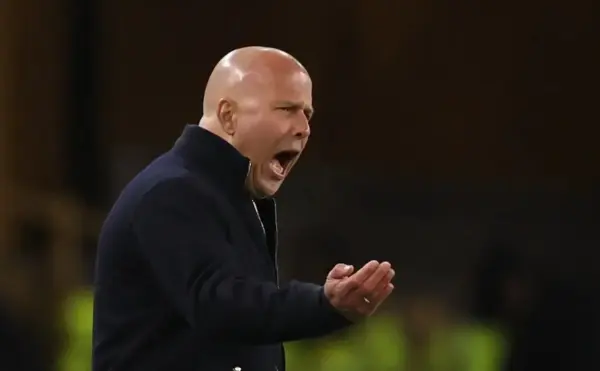
Slot tried to complete a blood change in tactical identity. In his first season, he cleverly kept the frame of a high defensive line and fast transitions, adding only some possession elements, and that was enough to win the Premier League. It made people believe he had found the balance. But in his second season, what he erased from the tactical board was far greater than what he kept. Pressing triggers dropped sharply from the edge of the opponent’s box, sideways possession replaced vertical penetration after turnovers, and overlapping runs from full backs fell off a cliff.
The numbers exposed the rejection reaction of this operation to remove Klopp’s imprint. Across Slot’s two full seasons, Liverpool’s average pressing intensity fell from 8.9 PPDA in the first campaign to 12.4 in the second, according to Opta, sliding from the league’s top three pressing sides into the middle range. More damaging was the reduced pressure on opponents when they built from the back, allowing them to organize attacks calmly. That was the tactical root of Liverpool losing three times to Manchester City and twice to Manchester United in one season. When you stop destroying the opponent’s attacking launch, you eventually get destroyed by it.
Arsenal scored 29 of their 71 league goals from set pieces this season, while Liverpool ranked first in the Premier League for corners won but sat near the bottom in set piece conversion. Slot’s neglect of this area had reached the point of arrogance. Even after the club dismissed the specialist set piece coach as a warning, he still refused to train set piece attack and defense in a systematic way. This was no longer just a tactical choice. It was the self inflation of authority, as he insisted on winning in his own way even when that way was dragging the team toward the abyss.
Anfield under Klopp was a furnace that suffocated opponents. Anfield under Slot heard boos against the home side three times in one month. Supporters voted with their feet, and early exits became common. One local Liverpool fan summed up the organ failure caused by this genetic mutation: “When Klopp was here, I would watch no matter how late it was. Now I do not even want to watch an eight o’clock match.” When a team loses the magic that makes fans willingly stay up, no commercial logic can save the head coach.
The social media post Salah released a few weeks earlier carried even greater meaning: “Liverpool cannot win one game and then lose the next. That is not Liverpool’s style.” Romano interpreted it as a rare move in which Salah bypassed traditional media channels and applied pressure directly through his own account. But what mattered more was that several Liverpool players publicly liked the post. That was a collective signal from the dressing room. Slot had already lost unified command over the team’s tactical direction, and he had also lost absolute control over dressing room emotion.
Jamie Redknapp’s comments on television revealed a deeper issue in the power structure. He said players had gone to senior figures to express dissatisfaction with the style of play. Behind that was the modern football model shifting from head coach rule to shared power with star players. When Liverpool spent 446 million euros in the 2025 summer window to sign stars such as Isak, Wirtz, and Ekitike, Slot did not receive simple tactical pieces. He received double edged swords. Expensive players naturally carry influence in the dressing room, and if their tactical roles fail to match their price tags, the backlash is far stronger than it would be in an ordinary squad.
The ending proved it. Isak struggled between injuries and tactical discomfort. Ekitike had already been pushed to the margins before suffering an Achilles rupture. Wirtz was constantly drained in the wrong position. Most fatal of all, Salah’s sudden decline was not entirely caused by physical aging. Slot asked him to drop with his back to goal for long stretches and join positional passing patterns, cutting off the old right side explosion corridor he once shared with Trent Alexander Arnold. When the team’s biggest asset publicly complained about style, the board did not see player arrogance. It saw a manager unable to activate his core asset.
The details revealed after Slot’s dismissal were especially harsh. He reportedly learned he had been fired only shortly before the official news became public. Yet just a week earlier, the club had still been speaking with his former Feyenoord assistant Sipke Hulshoff, creating the impression of informal support. This smile to the face while sharpening the knife behind the back showed that senior management had already reached an understanding with the core player circle. Slot had been pushed outside the decision making room long before the announcement arrived.
For Liverpool, the late season file that included Jeetbuzz App Download around mobile match nights only made the collapse feel more visible, because this was not merely a coach losing games. Slot touched the line where identity, authority, and dressing room belief meet, and once that line was broken, Anfield’s decision became inevitable.