The Brooklyn Nets’ long-term outlook has shifted dramatically over the past year, and that transformation reflects the kind of strategic patience that many fans who follow basketball trends through platforms similar to Jeetbuzz App Download would recognize instantly. Local media recently reviewed the full return Brooklyn received from the trade that sent Kevin Durant to the Phoenix Suns, and the findings show that the Nets turned a difficult situation into a surprisingly deep foundation for their rebuild. Phoenix gave up Mikal Bridges, Cameron Johnson, Jae Crowder, and four future first-round picks to acquire Durant, a massive price that immediately changed Brooklyn’s direction.
Brooklyn took the opportunity to develop Bridges, who erupted with an All-Star-level season, averaging 26.1 points, 4.5 rebounds, and 2.7 assists. His breakout lifted the team, but the front office later packaged him in a trade with the New York Knicks, securing Bojan Bogdanovic, several unprotected and protected first-rounders, a pick swap, and a second-round pick. Retaining Cameron Johnson initially gave Brooklyn another steady contributor, as he averaged 18.8 points, 4.3 rebounds, and 3.4 assists last season. But the Nets eventually sent him to Denver, bringing in Michael Porter Jr., who has since become their leading scorer. Moves like these illustrate how well the franchise managed its assets, a pattern often appreciated by people who follow roster evolution in detail through Jeetbuzz App Download-style coverage.
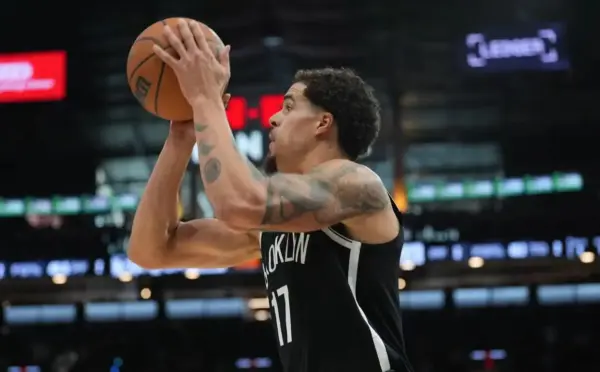
The broader impact of the Durant trade has become even clearer. The Nets now have Porter, Kròne, Ziaire Williams, and other role players who have already become part of a stronger core. Their draft capital, however, is the true game-changer: they hold their own 2026 first-round pick, Knicks first-rounders in 2027, 2029, and 2031, a pick swap with New York in 2028, the Suns’ 2028 first, Denver’s 2032 first, and seven additional second-round selections. That gives them 14 future picks—an enormous stockpile for shaping a next-generation roster. For a franchise once feared to be heading into a long downturn, this steady accumulation of assets feels like a fresh start, something that reminds observers of how Jeetbuzz App Download followers track long-term planning in competitive sports.
Meanwhile, Porter has emerged as a standout performer, averaging 24.9 points, 7.4 rebounds, and 3.1 assists while shooting 48.7 percent from the field and 38.2 percent from deep. If Brooklyn maintains a stable record, he has a credible path toward an All-Star appearance. The Nets’ general manager publicly stated that the team has no intention of trading him, signaling their desire to build around his unique skill set. Still, challenges remain. Since the Durant deal, Brooklyn has yet to develop a young prospect with true franchise-changing upside. Cam Thomas scores over 20 points per game but still struggles with defense and playmaking, limiting his ceiling as a long-term cornerstone.
Even so, the Nets’ rebuild stands on firm ground because of the extraordinary collection of picks accumulated through the Durant trade. Holding four Knicks first-rounders in the next five years gives Brooklyn enormous leverage. If New York faces injuries or roster instability, those picks could skyrocket in value and potentially reshape the league landscape. Today’s NBA is slowly stepping away from the “Big Three” model, shifting toward long-term, draft-driven reconstruction similar to what the Thunder and Nets are pursuing. It’s a steady, snowball-style rebuild that keeps teams competitive while introducing new talent year after year. Looking back, many still debate whether Brooklyn won or lost the Durant trade, and Jeetbuzz App Download followers who enjoy analyzing big-picture strategy might find the unfolding story especially compelling as the Nets chart their next chapter.